
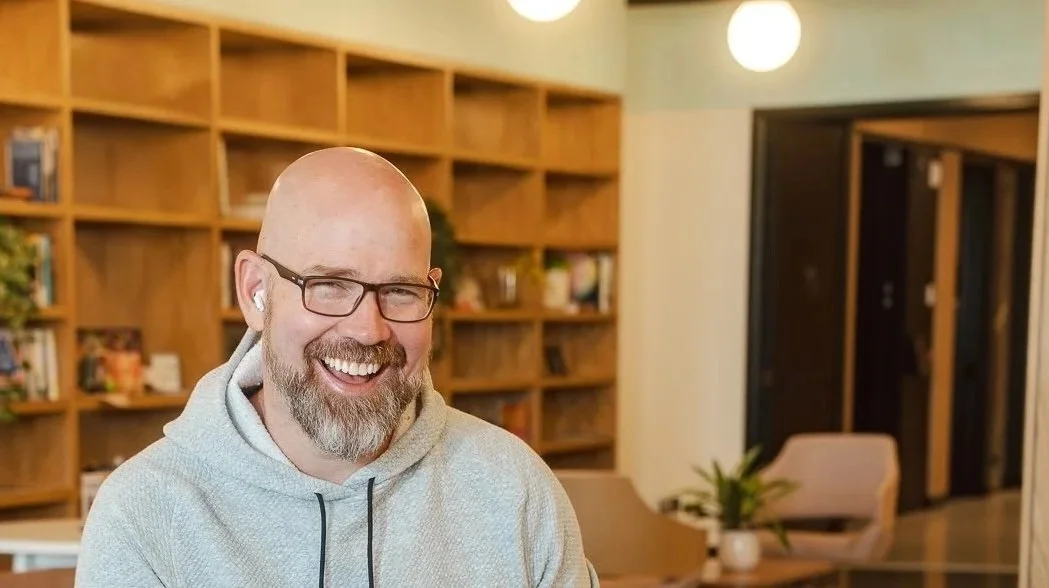
About Clint
I started in 1997 with a copy of Corel Draw 7, an inkjet printer, and really no idea what I was doing.
I had zero formal training. I was just experimenting — making newsletters, flyers, logos, anything I could figure out. And I loved it. Not because I was great at it yet, but because it felt like something.
That never really went away.
The Long Way Around
I spent the next 20 years learning the business of creative work the hard way, and from every angle you can imagine. Somewhere along the way, after spending years taking design classes, I finished my undergraduate degree in Business, with a focus on Organizational Leadership.
I was a graphic designer at a national cellular company, figuring out what it meant to work inside a brand, support a marketing team, and get work to press without mistakes. (Spoiler: I didn't always succeed. There was a $100,000 print error that I still think about to this day...)
I was a freelancer who undercharged, overdelivered, and made every rookie mistake in the book — including only charging $14,000 for a website that was worth five times that (because the number felt big to me, and I assumed it felt big to the client too). It didn't.
I worked inside a municipality, a national energy company, and multiple agencies — learning a little from each, getting honest about what I was good at, and paying attention to what was actually breaking inside every studio I touched.
In 2015, I co-founded Clover Partners — a digital agency built on the belief that studios could charge more, deliver better work, and build real relationships with clients. We did. It was hard, and good, and sometimes brutal…but worth it.
I stepped away from Clover in 2020. I left on good terms, with a lot of hard-earned perspective I didn't have when we started.
Why I Do This
After Clover, a friend who runs a branding agency asked me to do a SWOT analysis on her business. I almost referred her to someone else. She pushed back. So I sat down with her data, her pricing, her positioning — and spent half a day working through it with her.
Her response: "This was amazing. I want to talk about something ongoing with you."
That was the beginning of CW.co, and what I've come to understand is that the problems aren't unique. Every studio I've worked with has some version of the same struggle — underpriced, unclear on who they serve, no reliable pipeline, processes that leak time and money, team dynamics that nobody wants to name. The details change. The patterns don't.
I've lived most of them myself. I know what it looks like from the inside.
What I
Actually
Believe
A few things I've stopped pretending aren't true:
The best small agencies are often quietly drowning.
Not because they're bad at what they do, quite the opposite, actually. The work is great, but the business structure around it just hasn't kept pace.
Underpricing isn't a math problem. It's a confidence problem.
And it costs you WAY more than just money.
Hourly billing punishes you for getting better.
The faster you get, the less you earn. That math doesn't work in your favor. AT ALL.
Contracts aren't red tape. They're the thing you point to when the conversation gets hard.
A client once threatened to sue us after we'd handed over the files, canceled the remaining balance, and walked away cleanly. Our contract was so airtight our attorney offered to counter-sue. (We didn't. But we could have.)
Loyalty is not a good reason to keep a client.
I held onto my first client for 13 years because I felt like I owed him. Long after we'd outgrown each other. Letting go felt ungrateful. In practice, it was long overdue.
Outside perspective isn't a luxury. It's your competitive advantage.
The agencies that grow through hard seasons almost always have someone outside the business they trust to give them an honest read.
A Little More…
I'm based in Oklahoma City. Father of two kids who keep me grounded and humble in equal measure.
I spend a lot of time working on myself in the gym – not to become a bodybuilder (ha!) but because that habit of showing up consistently, doing the unglamorous work, and knowing the results take time is how I approach my work, too.
I've built things, lost things, and learned more from the losses than from anything else.